
'India's sizeable foreign exchange reserves should serve as a buffer.'
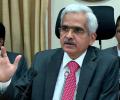
While efforts are being mounted on a war footing to arrest its spread, COVID-19 will impact economic activity in India directly through domestic lockdown. The second-round effects, it said, would operate through a severe slowdown in global trade and growth.
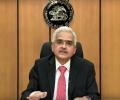
The RBI on Friday said it will give banks Rs 1 trillion through targeted long-term repo operations (TLTROs), of up to three-year maturity, to deploy in "investment-grade corporate bonds, commercial paper, and non-convertible debentures over and above the outstanding level of their investments in these bonds as of March 27, 2020."
To ease pressure due to the coronavirus lockdown, corporate have asked banks and the government for a six-month liquidity line, so that they can pay off their suppliers and employees.
The volume in the anonymous trading platform, NDS-OM, was Rs 7,210 crore - less than half the normal volume, but not as bad as the start of the day indicated.
The bulk of the erosion in terms of value took place in India's most-valued firms. For instance, Mukesh Ambani-led Reliance Industries alone has lost Rs 3.8 trillion in m-cap, followed by HDFC Bank, which has seen its value erode by Rs 2.45 trillion and Tata Consultancy Services (TCS), which has lost Rs 1.85 trillion to stand at Rs 6.24 trillion, making it India's most-valued.

'The only thing that is safe right now are government securities.'
The idea is to keep the RBI's information technology (IT) infrastructure in top shape to run the payments and settlement system uninterrupted 24x7, and run the full gamut of RBI functions from the secured data centres, as nearly 14,000 RBI staffers, except the senior-most management, work from home.

Market players said NBFCs and HNIs are recalibrating their plans based on the changing dynamics.

Both indices are down nearly 9 per cent from their all-time highs in mid-January. A sharp reversal seems difficult this time as the peak impact of the virus is yet to play out.
The answer to that depends on whether the globe is able to contain the virus spread, says Samie Modak.

Naved Masood, former secretary in the Ministry of Corporate Affairs and Sebi board member; TV Mohandas Pai, chairman of Manipal Global Education and Dinesh Kanabar, CEO, Dhruva Advisors have ceded their position on the NSE board following end of their tenure.

At issue size of Rs 10,355 cr, the offering will be Asia's biggest this year and fifth-largest domestically.

Minutes of the MPC meeting show Das felt economy needs more monetary stimulus as inflation outlook remains uncertain.

Amendment to the Act, sovereign guarantees, investment portfolio, realty holdings, and governance issues to shape valuation.

In the past 10 trading sessions, shares of the state-owned company have shot up more than 50 per cent.

Nominating Das, the Banker magazine, which announced the award, said India's banks have faced a series of challenges, from non-performing loans to issues around fraud. Faced with these challenges, Shaktikanta Das has taken steps to bring banking in India up to standard via a restrained approach to governance.
Such minutes will be available within two weeks from the date of its confirmation in the next meeting of the central board and on being signed by the chairman in the same meeting, the RBI said in a statement on its website.
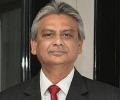
Patra, as executive director of the central bank, was the principal advisor to the Monetary Policy Department since July 2012.

On an overall basis, Nomura believes the economic conditions are suited for equity markets. The brokerage is predicting the market performance will be better in the first half of 2020 and "somewhat weaker" in the second half.
